Indonesia’s critical sectors face growing cyber threats every day. Ransomware incidents, data breaches, and targeted attacks can halt operations and damage public confidence. Many organizations still depend on old perimeter defences that no longer hold up well. A practical cyber resilience strategy therefore moves the focus to verifying every single access request.
Zero Trust offers a direct way to limit risks in finance, energy, healthcare, and government systems. It supports the wider cyber security strategy and connects with progress on the national cybersecurity strategy. When organizations adopt zero trust in their operations, they get better management of key data and systems.
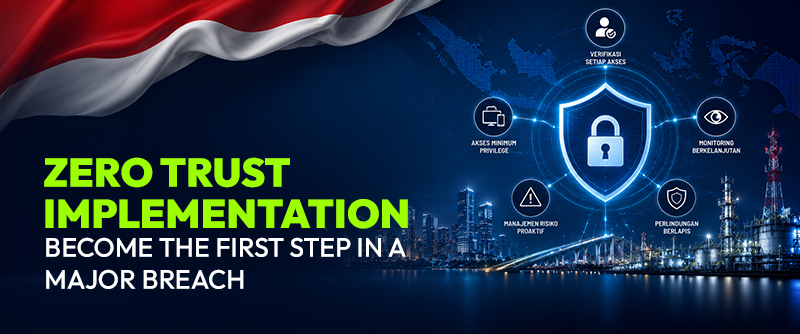
Zero Trust Architecture works on the principle that no user or device receives automatic trust. Instead, it treats every user, device, and application that requires proof before granting access. The model starts from the view that breaches can take place; therefore, it requires tight controls at every point to contain any damage.
Access begins with detailed checks on who is trying to enter. Multiple authentication steps, device health reviews, and role-specific permissions replace basic passwords. The system confirms the identity of the person, the device status, and whether the request fits usual patterns. In Indonesian critical sectors, this measure blocks unauthorized entry even when login details have been taken through phishing or other tricks.
Networks are split into separate small zones. Each zone contains only the resources required for its tasks. Movement between zones needs clear approval every time. If one zone is hit, attackers cannot spread to the rest. This method suits older systems still common in government offices and energy sites where complete replacement would prove expensive and disruptive.
Tools track activity around the clock and highlight anything unusual. Teams receive alerts based on logs and behaviour analysis. They review access patterns at set intervals and update rules as needed. These three elements together build layers of protection that reinforce the overall cyber resilience strategy without depending on one single point of defence.
The Indonesian Context: Critical Sectors Facing Cyber Threats
Indonesia’s fast digital expansion brings fresh dangers to essential services. Recent cases demonstrate how attacks can affect operations and put private information at risk. Key infrastructure faces ransomware, phishing campaigns, and focused intrusions that threaten the economy and daily life.
Banks and digital payment services manage large volumes of transactions each day. Incidents at places such as Bank Syariah Indonesia in 2023 leaked customer data. Criminals focus on online banking and fintech platforms to steal money or cause chaos.
Power networks and oil installations depend on linked control systems. Any interruption impacts wide areas. Security reports note growing probes against energy assets that could lead to blackouts or problems in supply chains.
Medical facilities hold private patient records. Ransomware has shut down hospital systems before and delayed care. Expanded use of remote connections and telemedicine adds more entry points that require attention.
National and regional bodies deliver citizen services through online platforms. The 2024 attack on the National Data Center halted immigration processing, school registrations, and other public tasks for several days. These cases show the urgent need for improved safeguards at every level.
Putting Zero Trust into practice involves more than just buying new software. Local realities create difficulties that demand careful handling.
Few experts hold deep knowledge of modern cybersecurity. Government bodies and companies lack staff who understand advanced tools or Zero Trust ideas. Available training helps but falls short of the scale required in key sectors.
Many systems in energy, public administration, and healthcare often run on outdated software and hardware. Such setups do not easily support new segmentation or monitoring features. Replacing them fully takes years, and must avoid any break in service.
Several rules address data protection, online transactions, and critical infrastructure. Different agencies sometimes issue overlapping instructions. The national cybersecurity strategy moves forward through BSSN work and the 2024-2028 plan.
Limited funds remain a common issue. Spending on Zero Trust tools and training must compete with other urgent needs. Smaller regional bodies in government or healthcare feel pressure the most.
A phased plan allows organizations to introduce Zero Trust without major disruption to daily work. The schedule below fits most situations in Indonesian critical sectors.
Teams list all assets, data movements, and current access points. They pinpoint the highest risks and note existing weaknesses. A mixed group from IT, security, and operations leads the effort. The plan stays connected to business aims and current rules.
Policies take shape for identity, segmentation, and monitoring. Suitable tools are selected that fit existing setups. Pilot areas are chosen for early tests. Clear documents explain the new steps so staff know what changes.
Changes roll out section by section, beginning with the most sensitive parts. Identity checks and micro-segmentation features connect to daily operations. Staff receive training on the new steps. Close watching during this period catches and resolves problems early.
Activity records undergo regular checks, and policies receive adjustments according to actual use. Audits confirm that rules stay in line with requirements. The framework evolves when threats change or new regulations appear. This stage keeps the approach effective as part of the cyber security strategy.
Projects that succeed begin with small tests before full rollout. Lessons from one department guide the next steps. Open discussion helps teams adjust to the change from old access habits to stricter rules. Practice drills that simulate incidents uncover gaps before real events occur.
Useful approaches include linking Zero Trust efforts with existing response groups and matching them to BSSN directions. Joint work between government and private groups spreads useful knowledge. Tools that give clear views without heavy changes perform well in mixed environments. Outside reviews at set times keep the work honest and on track. These actions turn Zero Trust into a working part of the cyber resilience strategy instead of a finished project.
Zero Trust, in so far evident, is an ongoing discipline that requires continuous refinement, adaptation, and commitment. As cyber threats evolve and digital ecosystems become more complex, organizations must regularly reassess their security strategies to ensure that trust is never assumed and is always verified.
The IndoSec brings together cybersecurity leaders, practitioners, policymakers, and technology experts dedicated to advancing Indonesia’s cyber resilience. Through insightful discussions and practical case studies, attendees will explore Zero Trust roadmaps tailored to local realities, covering implementation challenges, technology selection, governance frameworks, and the latest regulatory developments.
Participants will gain firsthand perspectives on real-world Zero Trust deployments, learning what works, what doesn’t, and how organizations are overcoming common obstacles. Sessions will delve into identity security, network segmentation, data protection, risk management, and emerging best practices that help transform Zero Trust principles into measurable outcomes.
Register today!