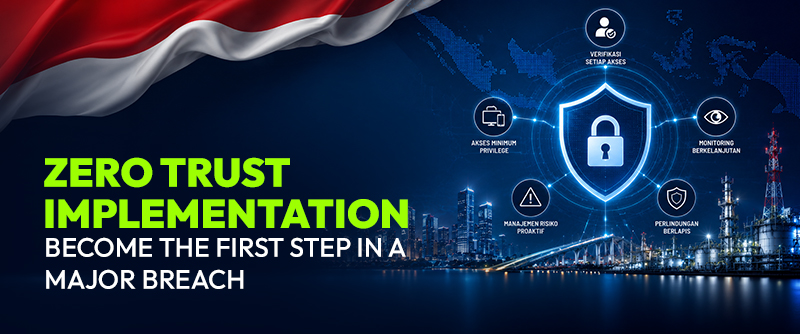
Zero Trust changes the way companies protect their systems. It removes the idea that anything inside the network is safe. Every user, device, and request must face checks before access is allowed. Indonesian enterprises need this approach more than ever as 2026 arrives. The digital economy keeps growing. More businesses use cloud services, remote access, and connected operations across banking, manufacturing, and government. Yet threats keep changing. Rules from authorities also become stricter. Organisations that follow Zero Trust principles lower the chance of serious incidents. They gain better control over who reaches what data. The method fits local conditions in which many companies run both old servers and new cloud setups. Practical steps help these firms build protection without stopping daily work.
Several conditions in Indonesia make Zero Trust necessary for enterprises in 2026. Digital growth brings new connections across the country. At the same time, exposure to attacks increases.
Attackers now use artificial intelligence to make their actions faster and harder to detect. They create realistic deepfake messages, automated phishing, and advanced malware. Reports from BSSN show billions of anomalous events in recent periods, many of which are linked to sophisticated techniques. Traditional security often depends on known signatures and falls short against these new methods. Zero Trust treats every connection as potentially risky. It limits how far an intruder can move even after an initial breach. Companies that prepare for these AI-related risks reduce the impact of successful attacks and avoid prolonged disruption.
Official requirements continue to develop. Presidential Regulation 47 of 2023 set foundations for national cyber crisis handling with BSSN in a key role. Discussions around the Cybersecurity and Cyber Resilience Bill point toward clearer obligations for critical sectors in 2026. These include faster incident reporting, regular testing, and stronger data protection measures under the Personal Data Protection Law. The overall direction supports a national cybersecurity strategy that emphasises resilience. Zero Trust supports compliance because it builds verification and monitoring into normal operations. Organisations avoid last-minute fixes when controls already check every access attempt.
Many Indonesian enterprises manage mixed technology setups. They combine on-site equipment with services from several cloud providers and allow staff to work from different places. Supply chains also link to external partners. Old perimeter defences cannot cover these scattered points effectively. Attackers who enter one area can move sideways with less resistance. Zero Trust secures each request based on current context rather than network location. It aligns with the cloud adoption push while keeping sensitive information protected. Enterprises gain stability as hybrid models become standard.
A step-by-step plan helps Indonesian organisations adopt Zero Trust without major interruptions. The sequence below targets early results and steady progress across four areas.
Identity forms the starting point. Companies must verify every user and device each time access is requested. This involves multi-factor methods, strict control of high-level accounts, and frequent checks of permissions. Teams begin by listing all accounts and linking them to central directories. Access is granted only for the exact time and purpose needed. Many local financial institutions have seen fewer unauthorised attempts after similar early actions. The result is a shift from fixed passwords to checks that consider location, device health, and behaviour.
After identities are under control, attention turns to separating network areas. Micro-segmentation creates smaller protected zones so problems stay contained. Policies apply directly to applications and workloads even in cloud or mixed settings. Mapping data movement comes first, followed by rules based on business needs. This work often uncovers weak spots in older applications. Tests show that breaches remain limited to one zone instead of spreading across the organisation. The step also helps meet rules that apply to specific industries such as finance and public services.
Visibility becomes the next focus once basic controls exist. Systems watch activity across users, devices, and applications without pause. AI tools examine patterns and highlight unusual events for review. Local security teams can connect these tools to current operations centres to handle larger numbers of alerts. Emphasis stays on useful information that leads to quick decisions. Regular practice exercises improve detection accuracy over time. By the end of the year, response times improve, and efforts align better with national guidance on cyber risk management in Indonesia.
Technology alone does not deliver security. Staff at every level require training on new processes and updated rules. Governance groups with members from different departments review access and incidents regularly. National programmes that develop local skills offer support for closing gaps. Audits and reports to senior leaders maintain direction. This work continues because both threats and available tools keep changing.
Enterprises in Indonesia meet several common difficulties during Zero Trust projects. Early planning reduces delays.
Qualified people are limited. Partnerships with training organisations and government-backed initiatives help existing teams gain necessary knowledge. Gradual rollout spreads the learning instead of demanding many new hires at once.
Older equipment may not support modern features directly. Teams identify important systems first and move them in controlled stages while using temporary safeguards.
Spending at the beginning can seem substantial. Clear calculations of potential savings from fewer incidents and easier compliance justify the investment. Small, successful steps prove value and support larger funding later.
Different agencies issue overlapping expectations. Reference to the national cybersecurity strategy provides consistent direction. Specialists familiar with Indonesian rules assist in matching controls to exact needs.
Experiences from local organisations provide useful guidance. A security head at a large bank in Jakarta observed clear drops in phishing success after improving identity checks. A technology leader in telecommunications described how network segmentation stopped a test attack from reaching other areas. Officials connected to government work stress the value of tying company actions to wider cyber risk management goals. These examples indicate that measured progress brings measurable improvements within months. Senior management now sees Zero Trust as support for business expansion and operational safety. Common recommendations include securing clear commitment from executives and tracking results with specific numbers instead of general lists.
Enterprise cyber security conferences such as IndoSec serve as a focused gathering for Zero Trust topics. The 2026 edition will take place in Jakarta and gather security leaders, technical experts, and policy makers. Discussions will examine identity management, segmentation techniques, monitoring tools, and actual examples from Indonesian settings. Participants can explore ways to connect Zero Trust with local regulations and the cybersecurity strategy. Networking opportunities help build useful contacts and accelerate practical solutions. Enterprises preparing priorities for 2026 find direct value through expert sessions and market updates suited to conditions in cybersecurity in Indonesia. The event functions as the main place to turn concepts into concrete plans for the year ahead.